Every layer in a frame is either protecting your art or slowly working against it. The right framing materials keep colors bright, paper strong, and edges crisp for decades, while the wrong ones can quietly yellow, stain, and weaken the very thing you meant to show off. Here’s how each layer does its job, what “acid-free” really means, and how to choose the level of protection your piece deserves.
What Are Framing Materials, and Why Do They Matter?
Framing materials are every layer that touches or surrounds your art: the matboard, the backing, the cover, any mounting tape, the print itself, and the frame that holds it all together. They matter because art doesn’t just hang there. It spends years sealed in a small space with those materials, and whatever they’re made of affects how it ages.
Two threats do most of the damage:
Acid, which seeps out of low-quality paper, cardboard, and wood pulp products and causes yellowing, brown stains, and brittle paper.
Light, especially ultraviolet (UV) light, which fades inks and pigments over time.
Good framing materials block both. Curious how all the parts fit together? Our Anatomy of a Picture Frame article breakdown walks through every piece
.
What Is Acid-Free Framing?
Acid-free framing means using materials with a pH of 7 or higher, so they won’t release acids that damage your art. On the pH scale, 7 is neutral (like pure water), anything below 7 is acidic, and anything above 7 is alkaline.
When framing materials are acidic, the damage shows up slowly but permanently:
Yellowing of white paper and photo borders
Mat burn, a brown line where an acidic mat touches the art
Brittleness that makes paper crack or crumble
There’s one more ingredient to know: lignin. Lignin is the natural binder that holds wood fibers together. It isn’t an acid itself, but it can break down and produce acid over time. That’s why the highest-quality matboards are both acid-free and lignin-free.
Here at Frame It Easy, every matboard and every piece of foamcore backing we use is acid-free; no upgrade in the cart is required. Our foamcore goes a step further: it’s alkaline buffered to a pH above 7, giving your art an extra layer of protection from the back. You’re welcome!
How Each Layer Protects Your Art
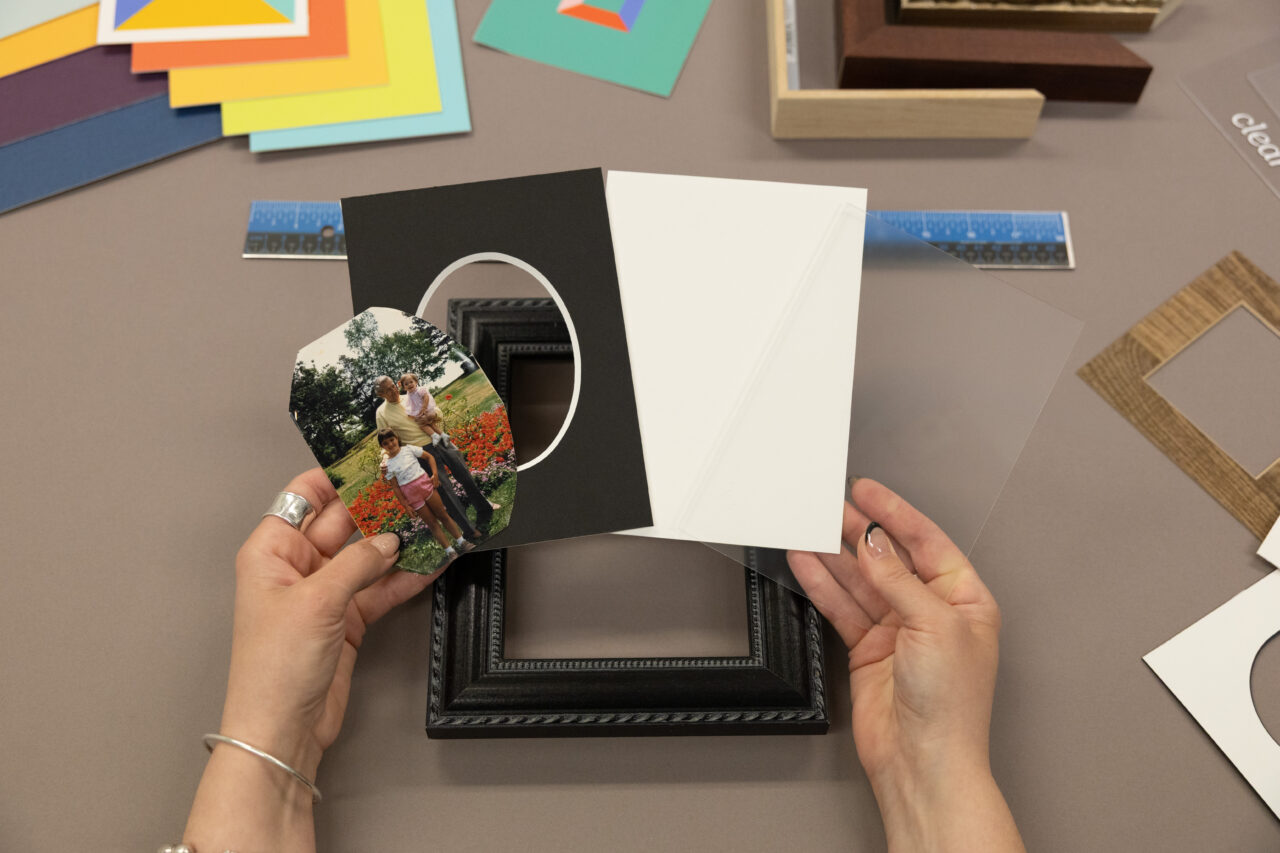
Each layer in a frame has its own protective job, and they work best as a team. Here’s what each one does.
Matboard: Your Art’s First Line of Defense
Matboard protects your art in two ways: it keeps acid away from the surface, and it keeps your art from pressing against the cover. That small gap matters, because condensation can form inside a frame, and art pressed against the cover is more likely to stick or get water damage.
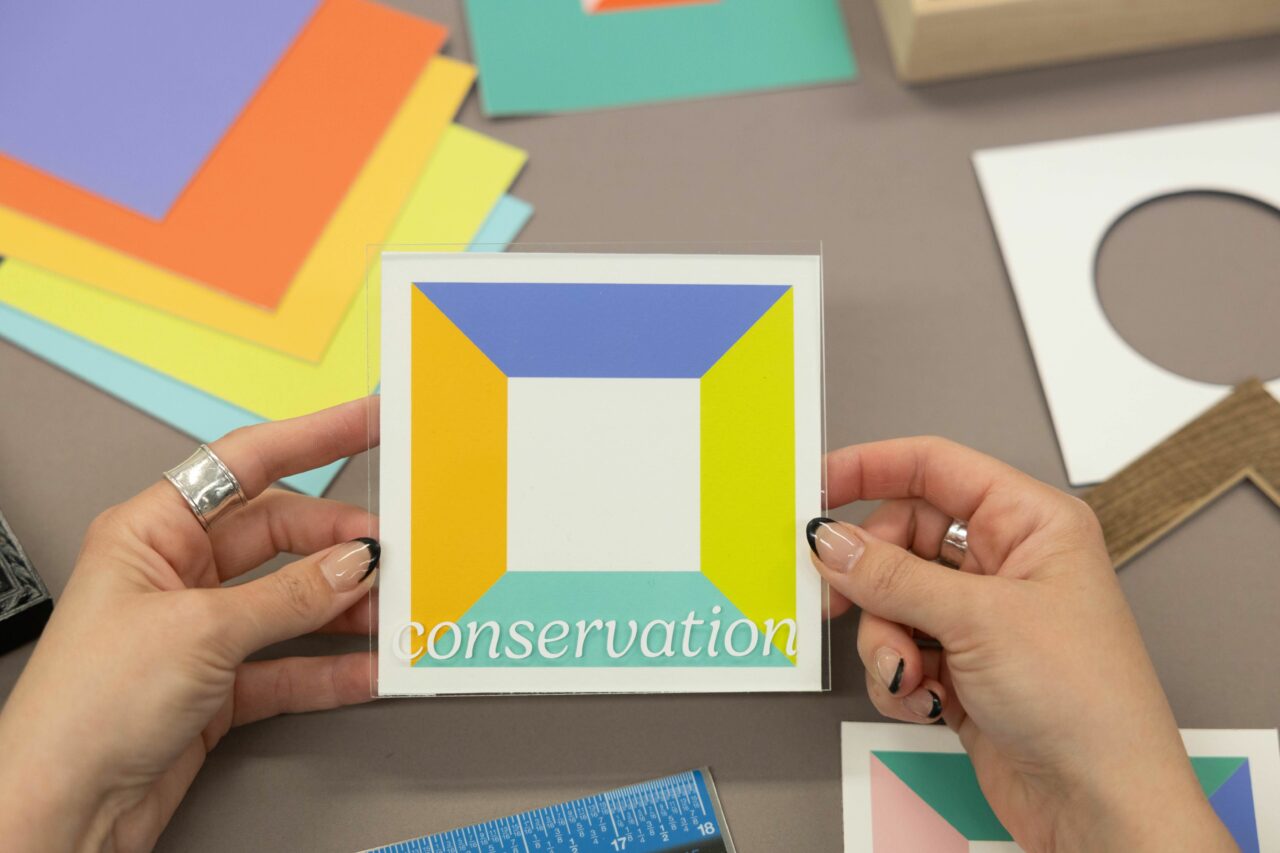
Our matboards come from Crescent, a company that has been making matboard for over a century, in three grades:
Standard acid-free matboard for everyday framing
Conservation matboard, which is acid-free and lignin-free for longer-term protection
Museum-quality matboard, made from 100% cotton rag, lignin-free, acid-free, and fade and bleed-resistant
Your backing touches the back of your art every single day it’s on the wall, so it needs to be just as safe as the front. Cardboard and chipboard backing are some of the most common sources of acid damage in store-bought frames, and that damage often isn’t visible until you take the art out years later.
Your frame cover protects your art from dust, fingerprints, bumps, and light. Our acrylic covers weigh about half as much as glass and are far more impact-resistant, so there’s no risk of shattered glass scratching your piece. You can choose from three:
Clear Acrylic: crystal clear, lightweight, and blocks some UV light
Non-Glare Acrylic: the same protection with a fine matte finish that cuts reflections
Conservation Clear Acrylic: blocks 99% of UV light, the best choice for anything you want to preserve long-term or hang in a sunny room
How your art is held in place matters just as much as what surrounds it. Regular household tape yellows, loses its grip, and leaves acidic residue behind that can stain your art for good. When you’re adding your own art to a frame, attach it to the foamcore backing with acid-free framing tape, which you’ll find on our accessories page. Our step-by-step guide on how to add art to frames walks you through it and explains which tapes and adhesives are safe to use.
Prints: Paper and Ink
Even the best frame can’t save a print that fades on its own, so protection starts with the print itself. When you order prints from us, every one is printed on acid-free paper:
Photo Paper: a bright white, semi-matte paper made for photos and text-heavy designs
Art Paper: 100% cotton with no optical brighteners (the additives that cause yellowing as they break down), and it’s ISO 9706 and ANSI Z39.48-1992 certified for permanence
Giclée Paper: a heavyweight cotton fine art paper that’s acid-free, lignin-free, and made for conservation and museum-quality reproductions
We print with pigment-based archival inks that capture every tiny detail and are rated to last up to 200 years under the right conditions. (Long enough to impress even the most discerning vampire.) Some of our inks are also UL GREENGUARD Gold certified, so there’s no harmful off-gassing sealed inside the frame with your art.
The frame’s job is to hold every protective layer snug and secure. We custom cut every frame from wood or rigid aluminum to within 1/16 of an inch of your art’s dimensions, so nothing shifts, slides, or gaps over time. Torn between the two? Here’s how wood vs. metal picture frames compare.
How Much Protection Does Your Piece Need?
The right level of protection depends on how valuable or irreplaceable your piece is and where it will hang. Every Frame It Easy frame starts with acid-free materials, so you’re already covered for everyday framing. From there, here’s a simple guide:
Everyday favorites (posters, family photos, kids’ art, travel prints): standard acid-free matboard and Clear or Non-Glare Acrylic.
Pieces you want to last (art prints, limited editions, wedding photos, anything in a sunny spot): conservation matboard with Conservation Clear Acrylic.
Irreplaceable originals (original artwork, historical photos, signed documents, heirloom needlework): museum-quality 100% cotton matboard with Conservation Clear Acrylic.
Hey artists, this one’s for you! If you’re selling originals or limited-edition prints, conservation materials are a selling point. Pairing a Giclée print with museum-quality matboard and Conservation Clear Acrylic gives your collectors a piece built to last for generations, and it shows you take your work as seriously as they do. Learn more about framing for artists and creative resellers.
Framing for a gallery, studio, or business? You get the same acid-free materials on every frame, whether you’re ordering one or one hundred. See how we help with framing for businesses.
Budget Frame Set vs. Frame It Easy: What You’re Really Getting
The biggest difference between a budget frame set and a custom frame isn’t the look on day one. It’s what’s happening inside the frame for the next twenty years. Here’s how the materials compare:
Typical Budget Frame Set
Frame It Easy
Matboard
Often unlabeled; may contain acid and lignin
Acid-free (pH 7+), with conservation and museum-quality options
Backing
Often cardboard or chipboard
Acid-free foamcore, buffered above pH 7
Cover
Thin glass or plastic, usually with no UV rating
Acrylic in Clear, Non-Glare, or Conservation Clear (99% UV protection)
A note on responsible sourcing. Protecting your art and protecting the planet go hand in hand. We work with U.S. suppliers, partner with metal vendors that recycle their scrap aluminum, and ship in recyclable packaging. Read more about our sustainability commitments.
Framing Materials FAQ
What are the best framing materials for preserving art?
The best framing materials for preserving art are acid-free and lignin-free matboard, acid-free backing, and a UV-filtering cover. For irreplaceable pieces, choose 100% cotton museum-quality matboard and acrylic that blocks 99% of UV light, like our Conservation Clear Acrylic.
Is acid-free framing worth it?
Yes. Acid-free framing is worth it for anything you plan to keep, because acid damage like yellowing and mat burn is permanent and can’t be reversed. At Frame It Easy, acid-free matboard and backing come standard in every frame, so you don’t pay extra for it.
Are Frame It Easy frames acid-free?
Yes. Every Frame It Easy frame uses acid-free matboard (pH 7 or higher) and acid-free foamcore backing that’s buffered above pH 7. Conservation and museum-quality matboards are available for even more protection.
Does acrylic protect art from UV light?
It depends on the acrylic. Our Clear and Non-Glare Acrylic block some UV light, while Conservation Clear Acrylic blocks 99% of UV rays, making it the best choice for valuable art or frames that hang in bright rooms.
How can I tell if my framing materials are acid-free?
Check the product label or the framer’s material specs for “acid-free” or a pH of 7 or higher. If the backing is brown cardboard or the mat’s cut edge has turned yellow or brown, those materials are likely acidic and should be replaced.
Protected, Displayed, and Totally Yours
Great framing materials do their best work where you’ll never see it: behind the mat, under the cover, and inside the backing, keeping your art looking the way it did the day you fell for it. Ready to build a frame that protects what matters most? Choose your matboard, cover, and print paper in our 3D Frame Designer and see exactly how it’ll look before it ever reaches your wall.
So where do I start?
Start by choosing something you have been meaning to frame. Then select a standard size or use a custom size in the 3D Frame Designer to create a secure fit for your display. We guide you every step of the way, giving you the confidence to properly frame your frameables! It’s that easy!
Whether you have a piece of art ready to frame, or you have something for us to print, we've got you covered. Our online custom picture framing perfectly fits not only your art, but your style and budget, too! Use our custom frame designer to create a frame, or browse our suggested frame designs. Happy designing!