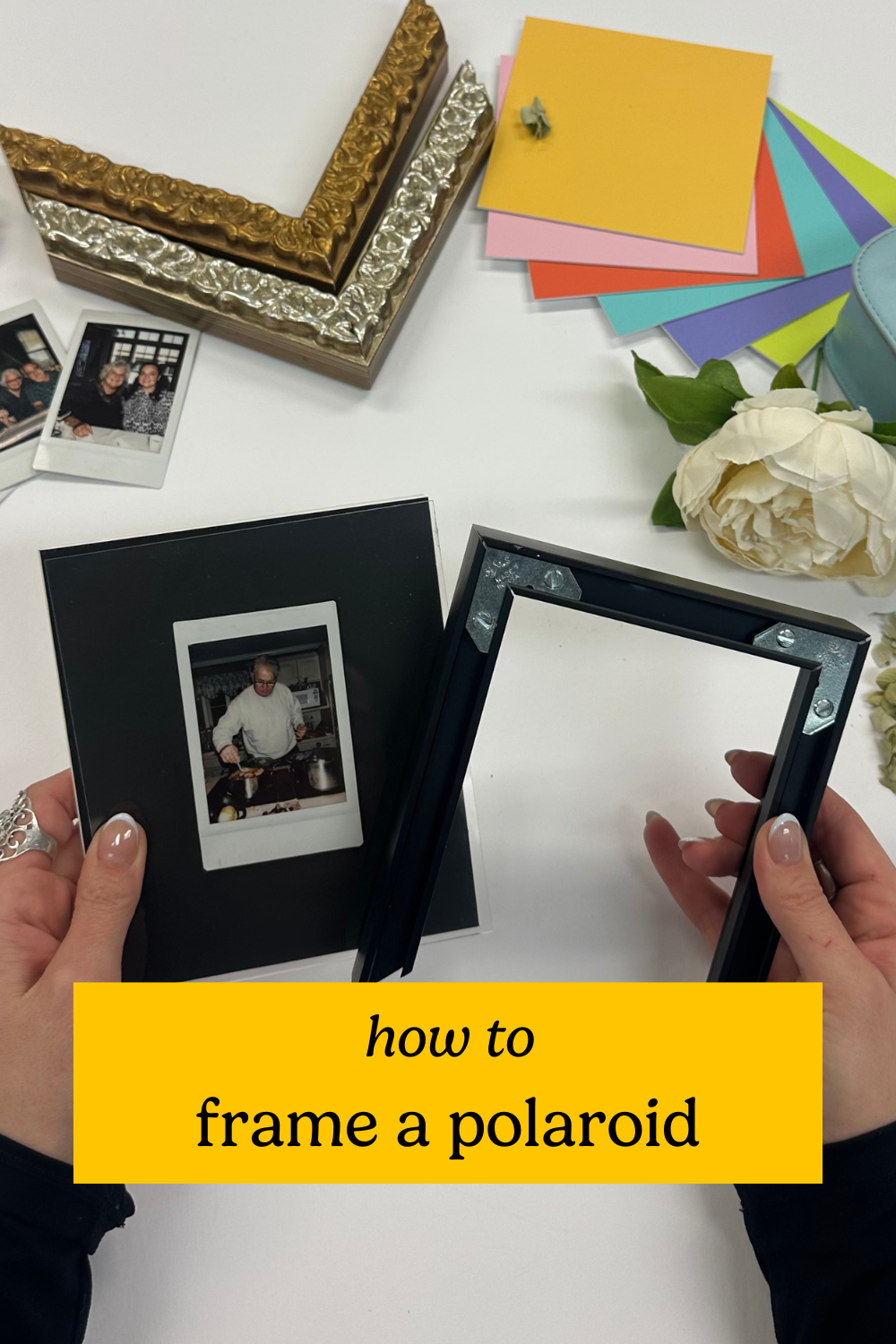
Framing a Polaroid is different from framing a standard photo print. Polaroids are thicker, have a built-in white border that’s part of the design, and are often one-of-a-kind. When you’re framing a Polaroid, the goal is simple: protect the photo while showcasing its full character.
Because these images can’t always be reprinted, choosing the right framing method matters.
Why Framing a Polaroid Requires Extra Care
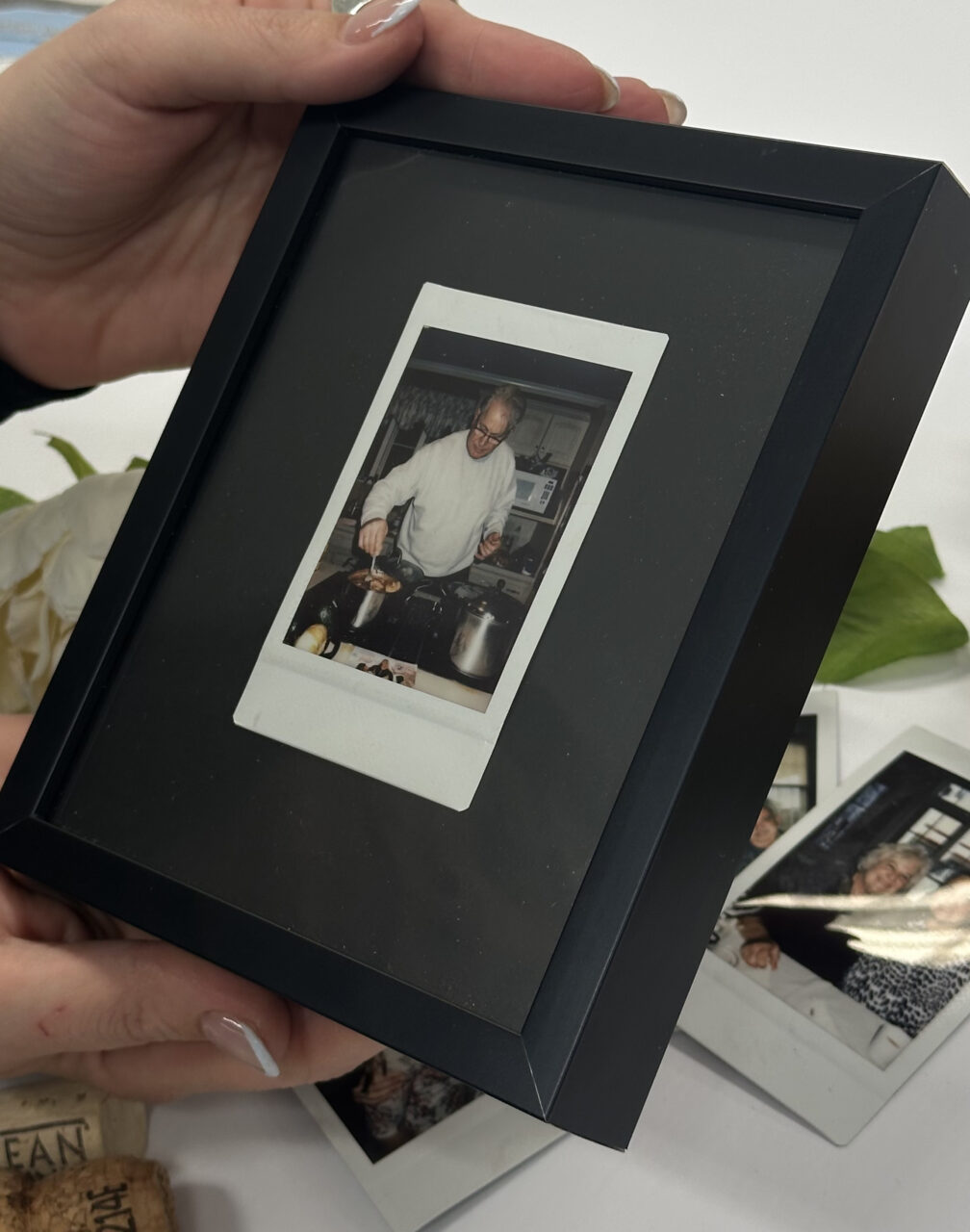
Polaroids have a layered structure that makes them more rigid than traditional photo paper. Over time, they can bend, warp, or fade if exposed to sunlight, humidity, or acidic materials. The white border is intentional and should never be trimmed. It’s part of what makes a Polaroid recognizable.
When framing a Polaroid, archival materials and proper spacing help preserve both the image and its structure.
Option 1: Float Mounting When Framing a Polaroid
Float mounting is one of the most popular and visually striking methods for framing a Polaroid. This technique allows the entire photo, including the white border, to be fully visible.
With a float mount, the Polaroid sits slightly raised from the backing, too, creating subtle depth inside the frame. The space around the image draws attention to the physical object itself, not just the picture. This approach feels modern and minimal while still protecting the photo. That’s what we want!
Float mounting works especially well when you’re framing a single sentimental image that deserves to stand on its own.
How To Float Mount a Polaroid
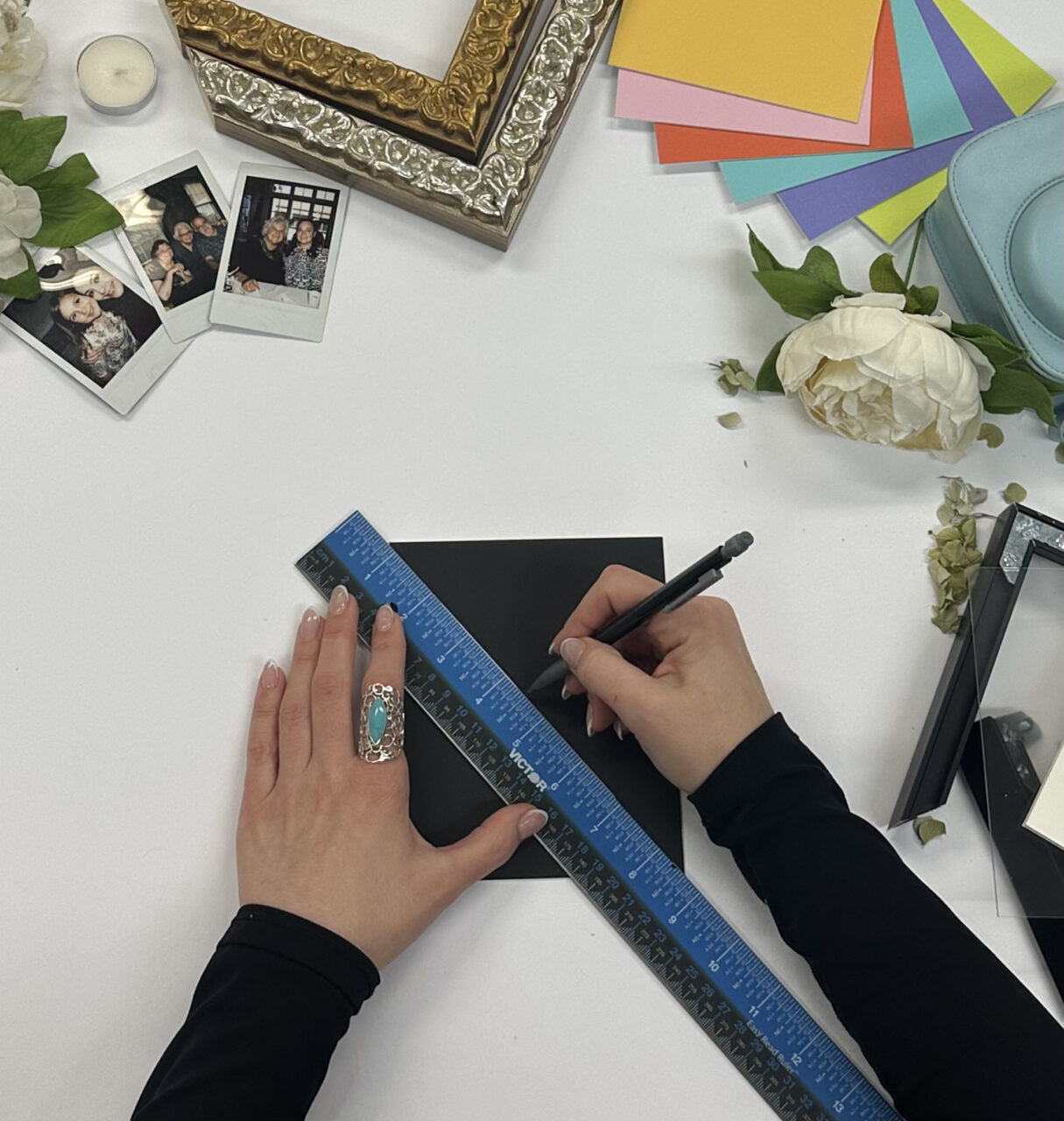
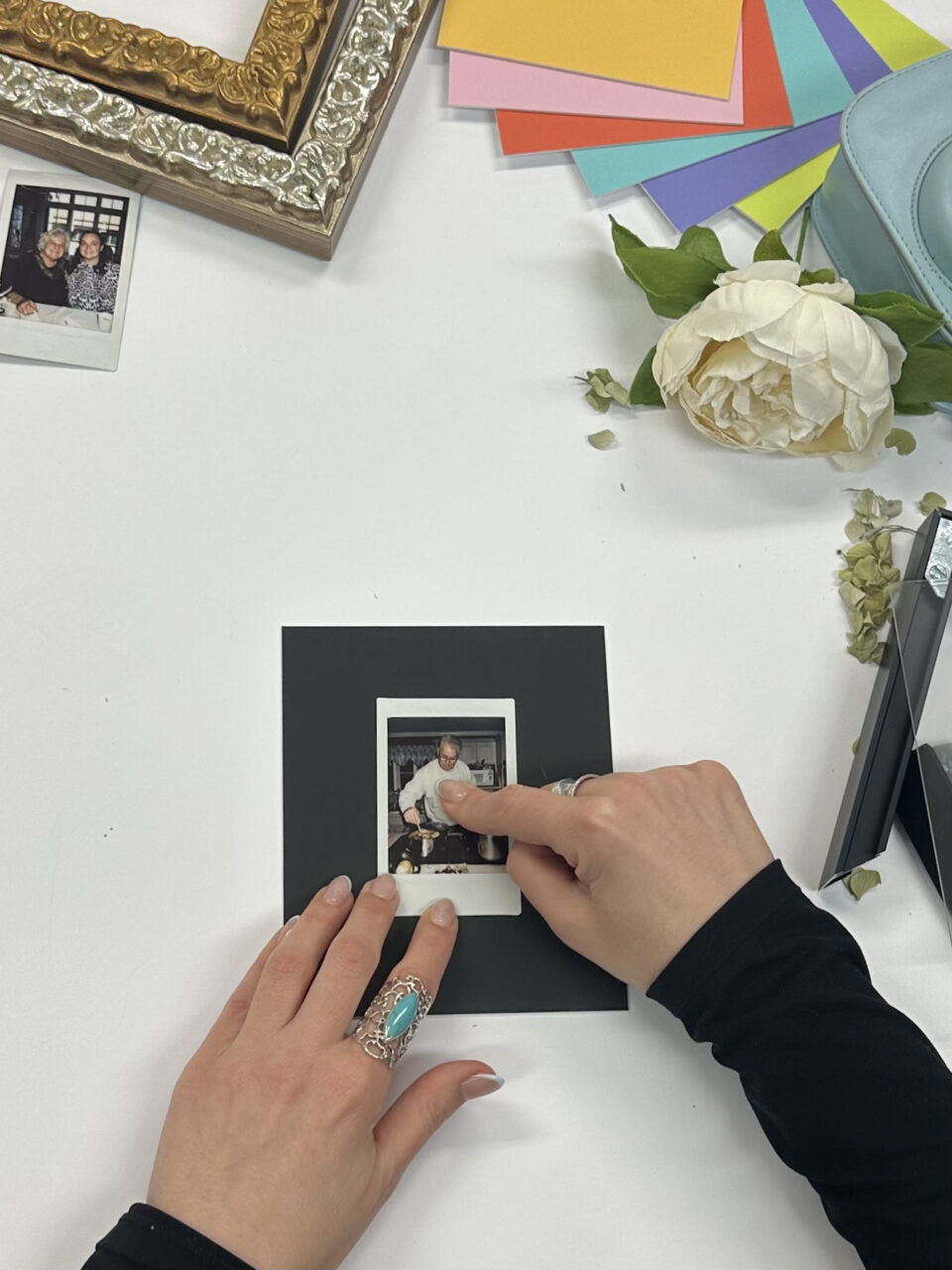
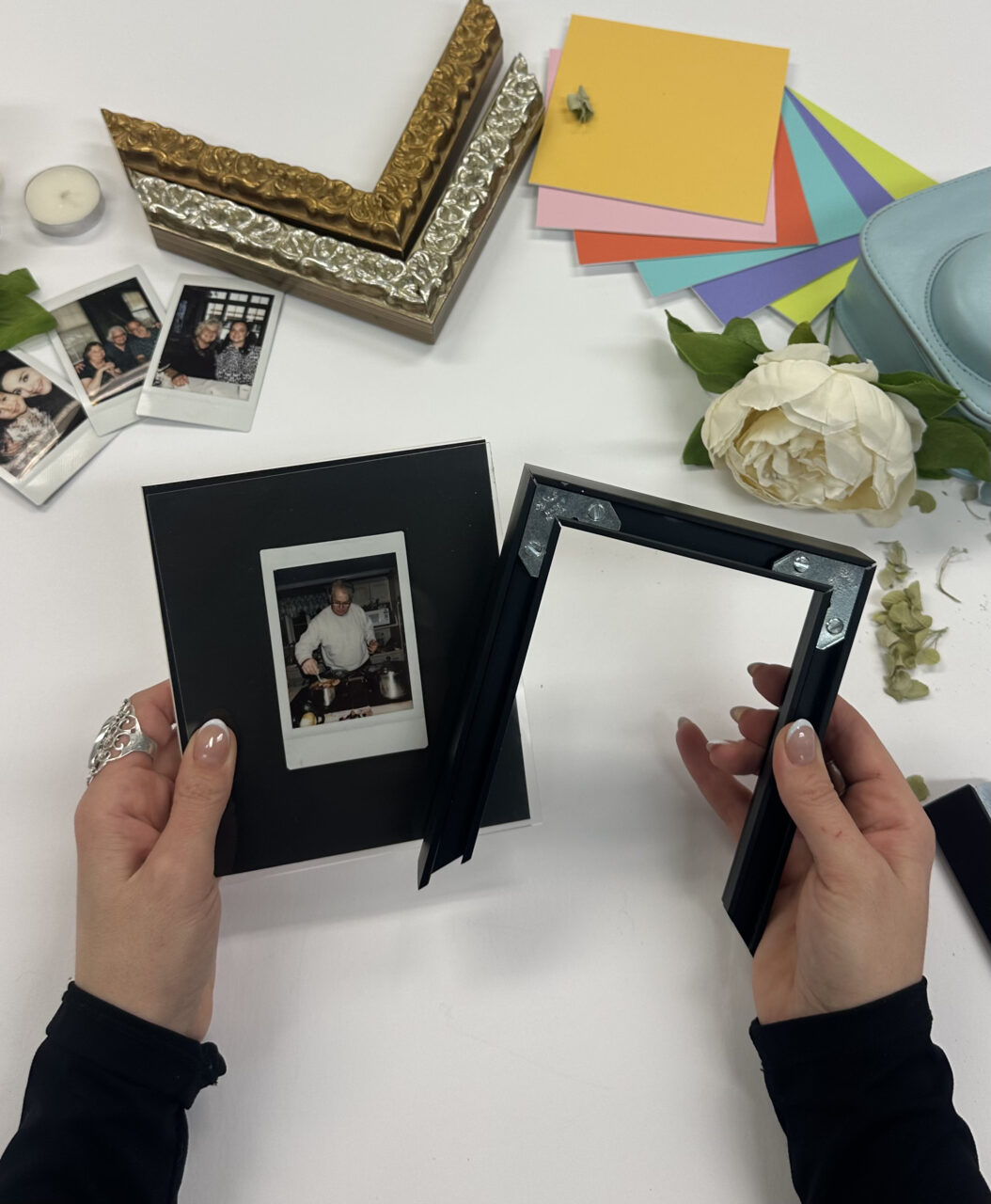
- Step 1: Find the center of your matboard
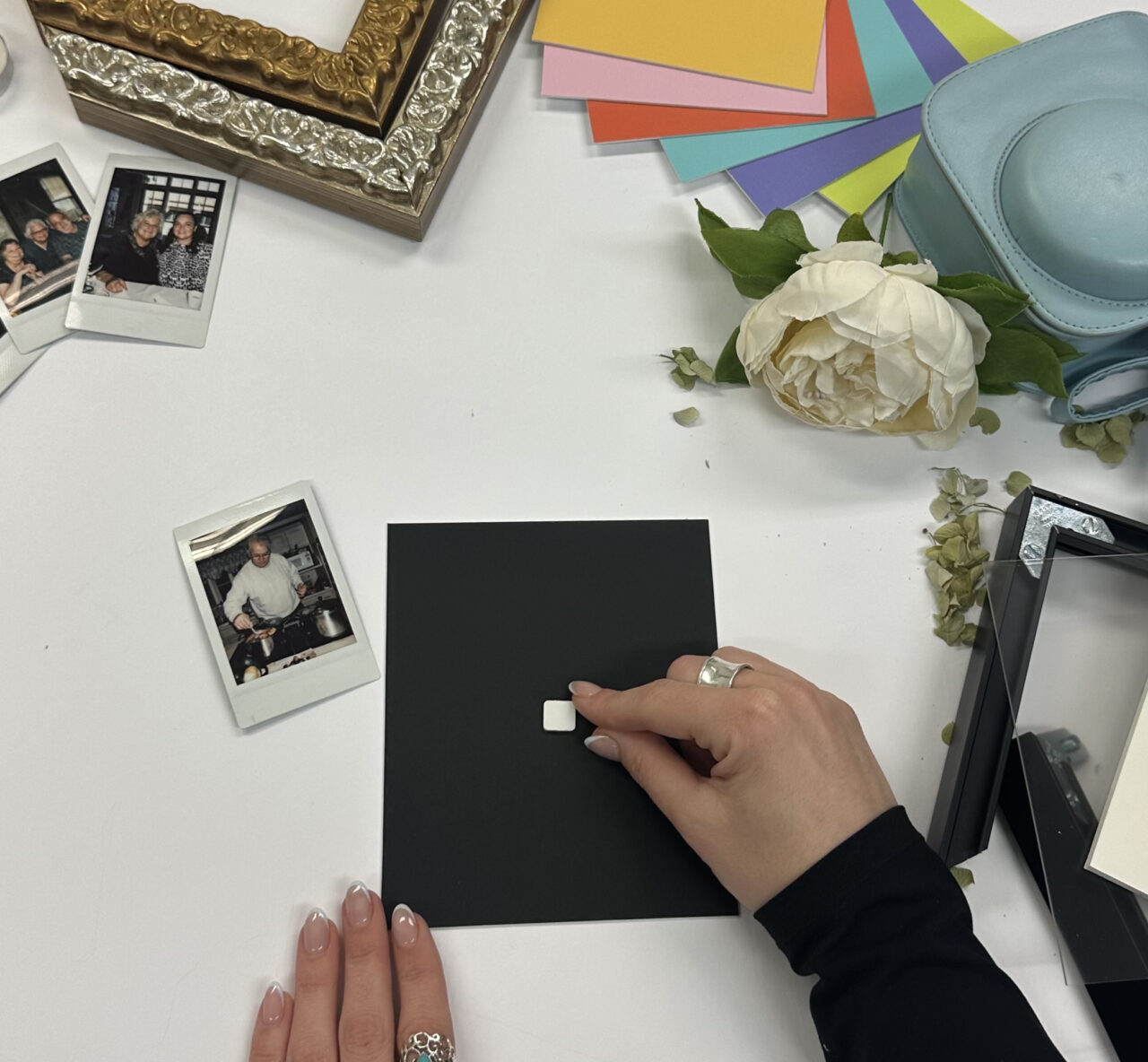
- Step 2: Place your adhesive
- Step 3: Flip and position your art
- Step 4: Disassemble your frame
- Step 5: Insert the mounted mage
- Step 6: Reassemble your frame
Option 2: Using Matting When Framing a Polaroid
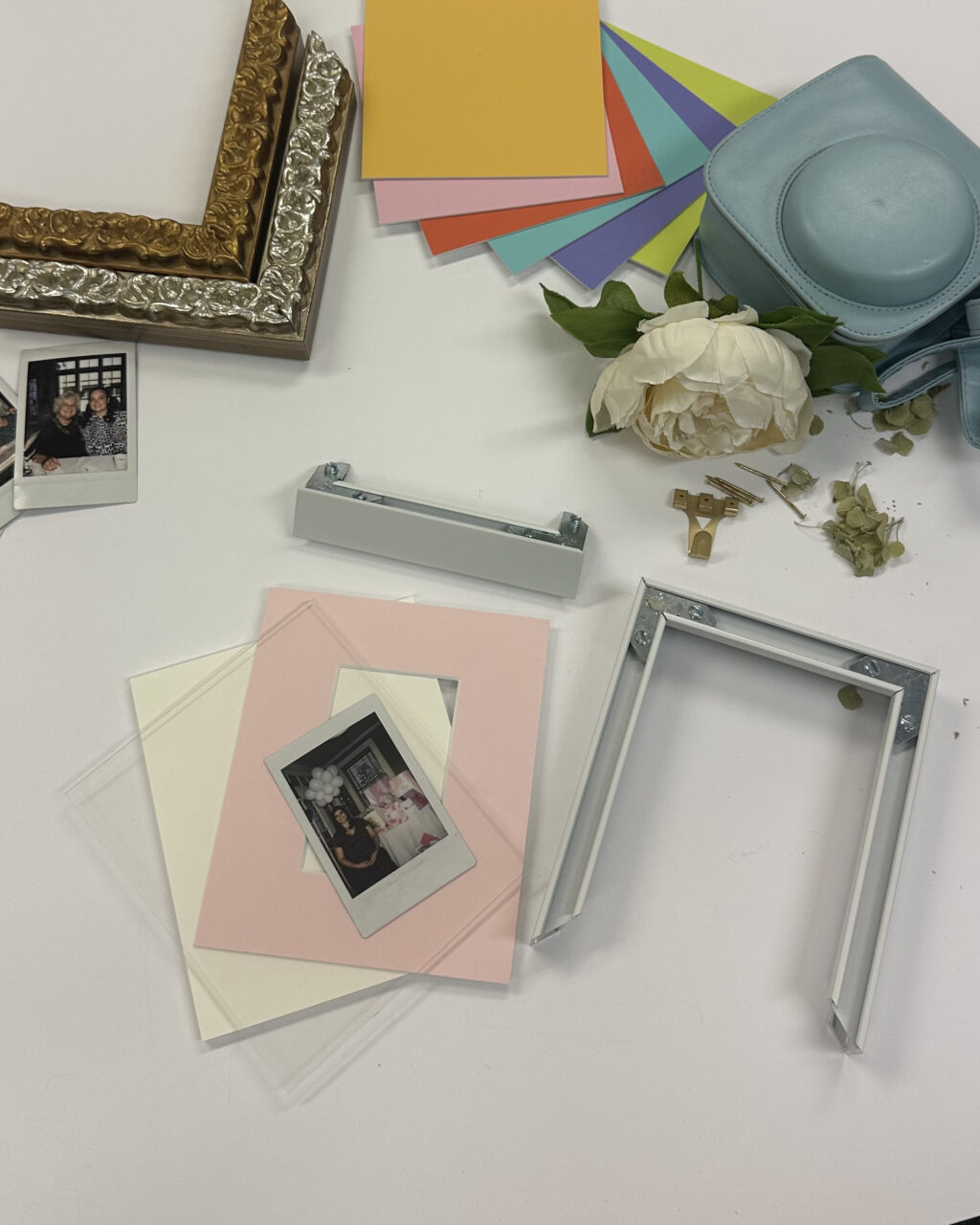
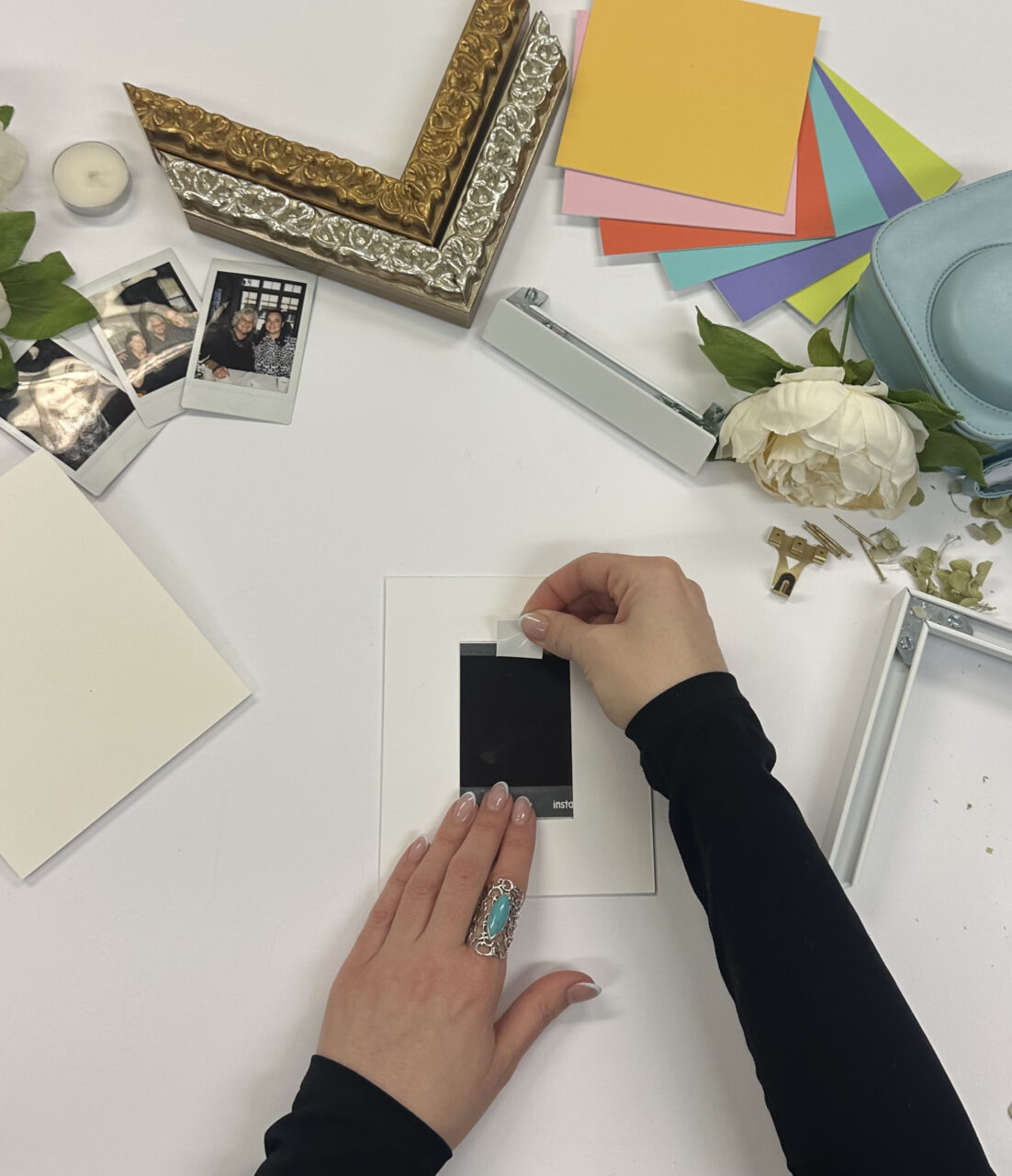
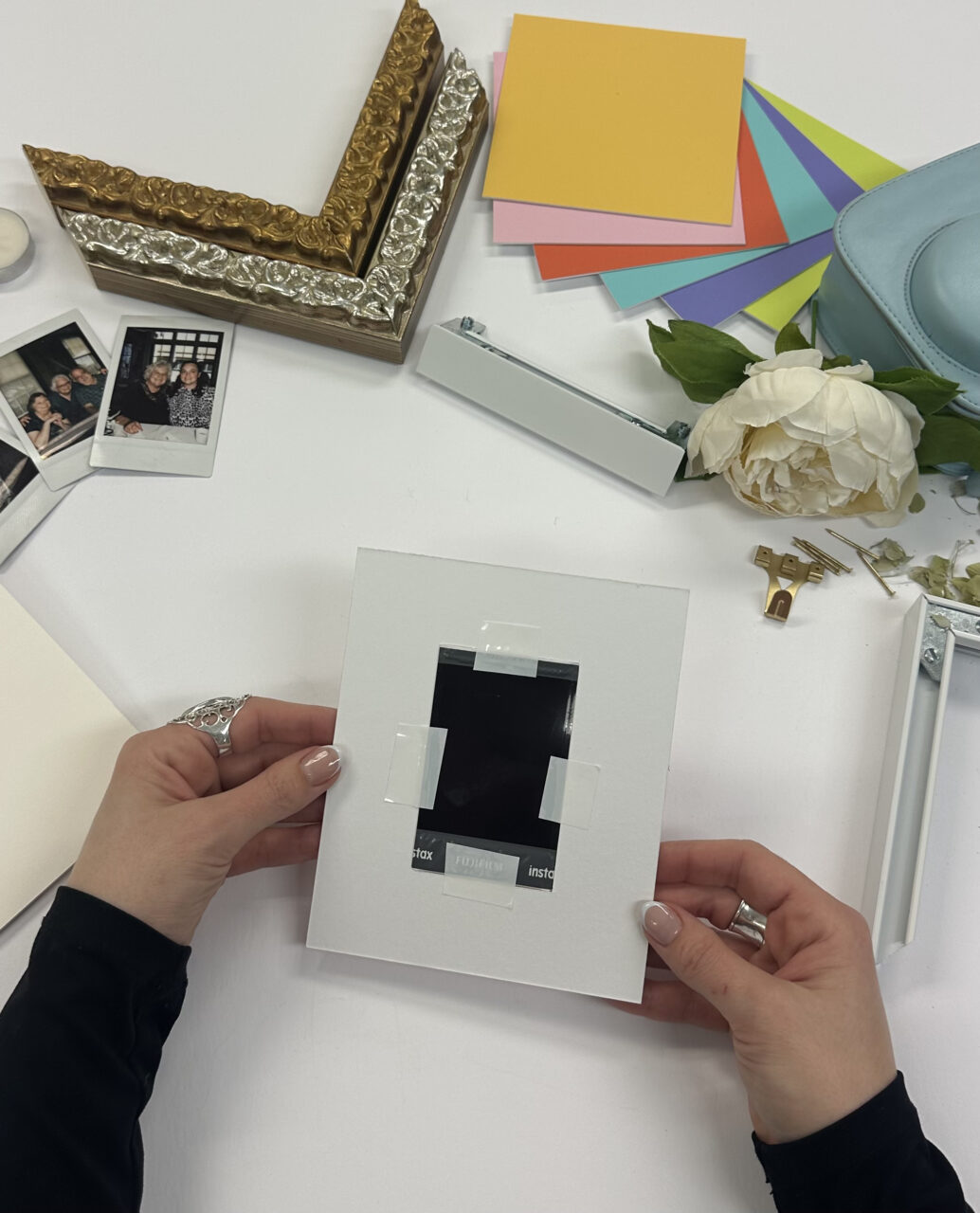
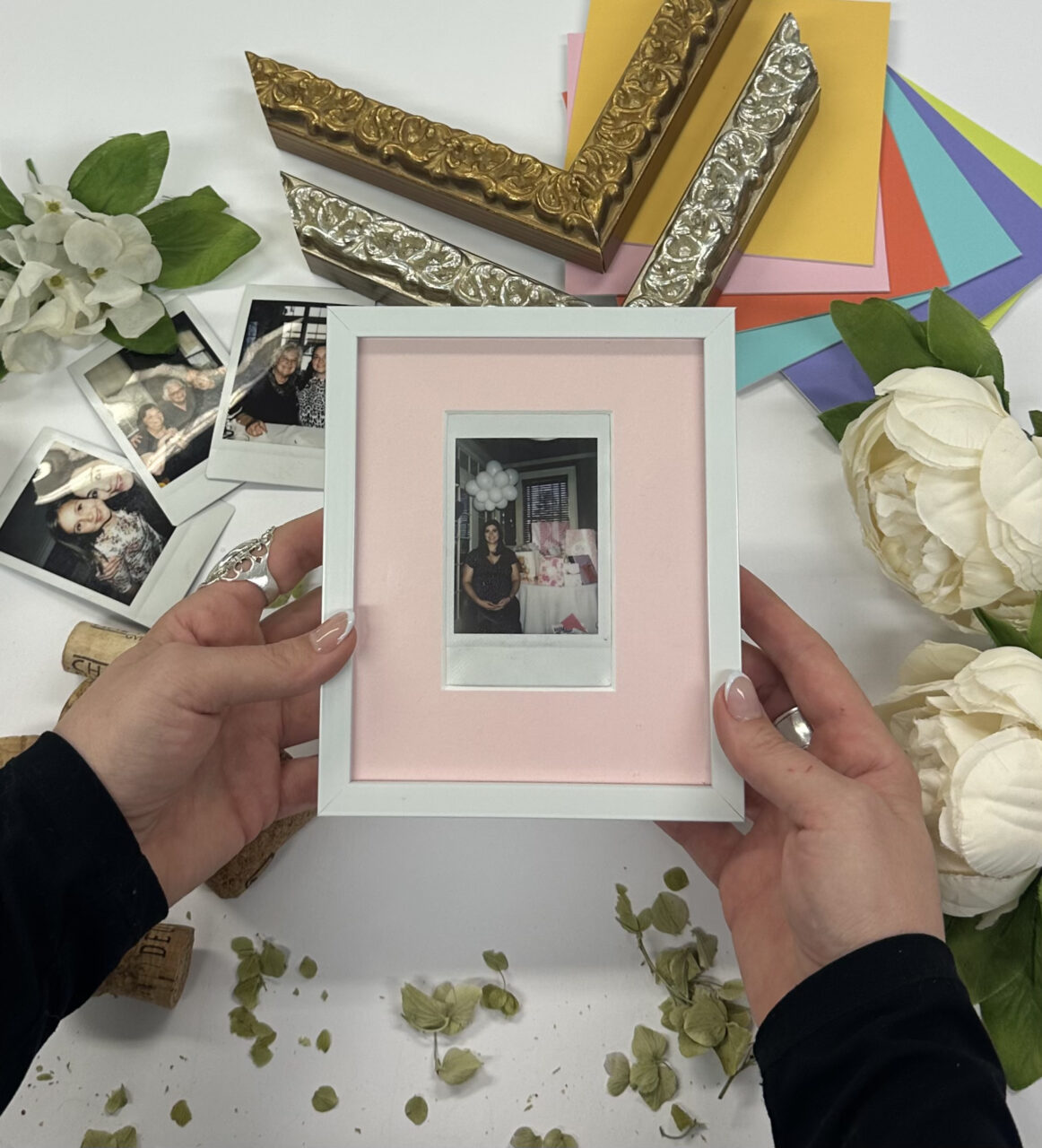
Matting creates a more structured and traditional presentation. When framing a Polaroid with matting, the mat opening is cut slightly smaller than the image so the photo is securely held in place.
Matting gives the small size of a Polaroid more visual weight. It adds breathing room and makes the presentation feel intentional, especially if the frame will be part of a gallery wall. A neutral mat creates a classic look, while a bold color can complement tones within the image.
How To Frame and Mat a Polaroid
- Step 1: Cut four small pieces of framer’s tape
- Step 2: Adhere your Polaroid to the back of the matboard
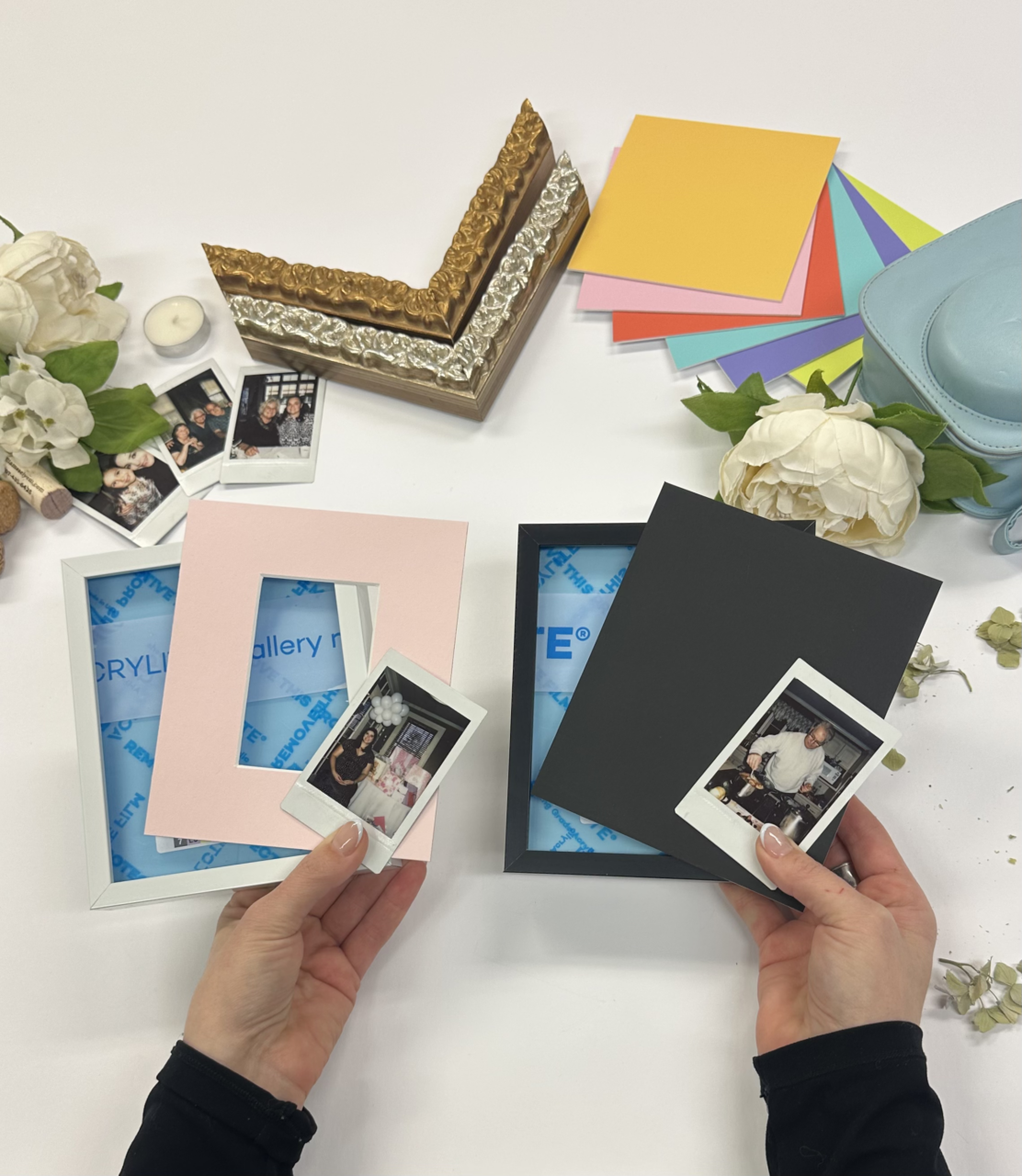
- Step 3: Place the mounted image and matboard on foamcore
- Step 4: Place acrylic on top
- Step 5: Disassemble your frame
- Step 6: Insert art and acrylic
- Step 7: Reassemble your frame
Shop Our Slim Picture Frame



Choosing the Right Frame Style
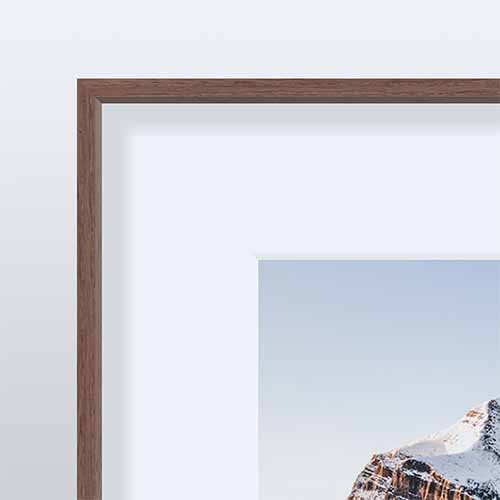
The frame you choose influences the overall tone when framing a Polaroid. Thin black or white frames create a clean, contemporary look. Wood frames add warmth and softness. Vintage-style frames lean into nostalgia and storytelling. Metallic finishes can add structure and contrast.
Because Polaroids are small, proportion matters. A very heavy frame can overwhelm the image unless you’re intentionally creating dramatic contrast. So we recommend a thinner frame for smaller art pieces.
Protecting Your Polaroid Long-Term
Framing a Polaroid isn’t just about appearance. It’s about preservation. Using UV-protective acrylic reduces fading over time. Acid-free matboard and backing prevent discoloration. Keeping the frame out of direct sunlight and away from humidity will help maintain the integrity of the image.
Avoid household adhesives or tape directly on the photo. Improper materials can cause irreversible damage. No, thank you!
Common Questions About Framing a Polaroid
What is the best way of framing a Polaroid?
The best way of framing a Polaroid is either float mounting or using matting with archival materials. Float mounting keeps the entire white border visible and creates depth. Matting offers a more structured and polished presentation.
Can you put a Polaroid directly in a frame?
It’s not recommended to place a Polaroid directly against a cover without proper support. When framing a Polaroid, use acid-free backing and consider spacing or matting to prevent sticking or long-term damage.
Should you trim the white border framing a Polaroid?
No. The white border is part of the photo’s design and structure. Trimming it can damage the image and reduce its visual integrity.
Is float mounting safe for Polaroids?
Yes, when done correctly with archival materials. Float mounting is a safe and popular option for framing a Polaroid because it preserves the full image while adding visual depth.
How do you protect a Polaroid in a frame?
Use UV-protective, acid-free materials, and avoid direct sunlight and humidity. These steps help prevent fading, warping, and discoloration over time.

Final Thoughts on Framing a Polaroid
Framing a Polaroid is about preserving a moment while giving it a finished, intentional presentation. Whether you choose a float mount for a modern look or matting for a more classic display, the right materials and thoughtful design will protect your photo for years to come.
If you’re ready to give your Polaroid a permanent place on the wall, start with a custom frame designed to support and protect it properly.